
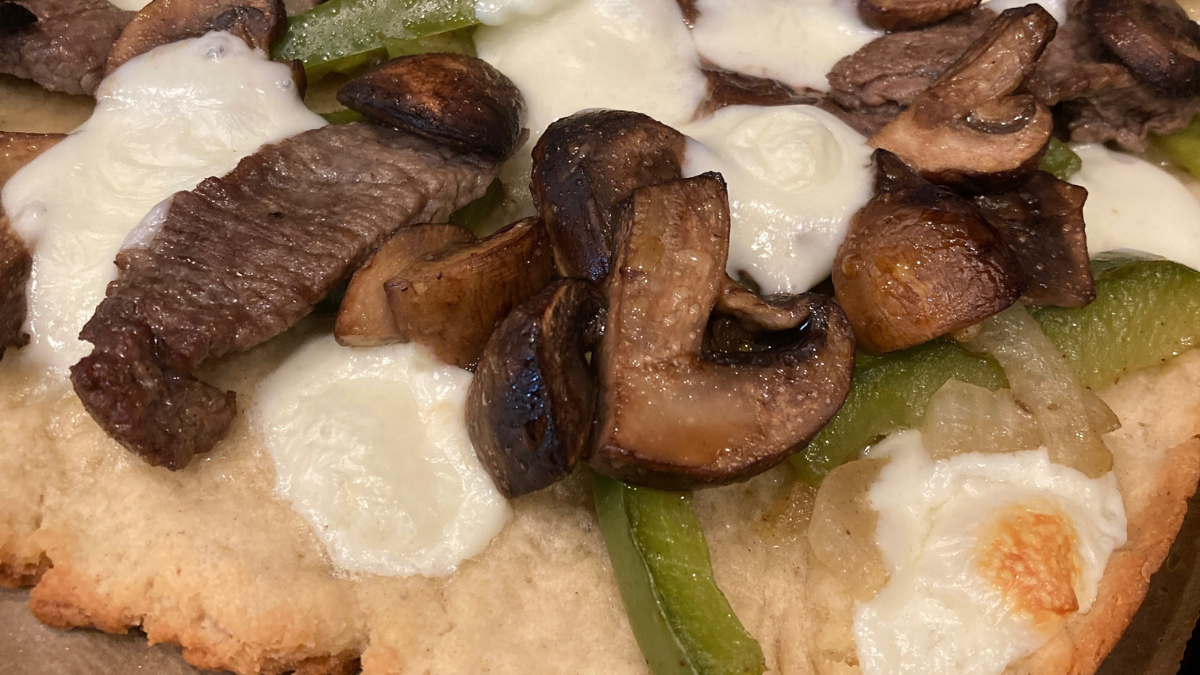
Need another way to prepare a ribeye steak? How about a fresh take on Cheesesteak? This Philly Cheesesteak Flatbread is a great way to use up leftover steak. Or, you can do what I did, and begin with a whole, slightly frozen ribeye steak. Either way, this recipe is great for a game-day crowd, a family movie night, or your Friday pizza night at home.
CUTTING THE STEAK
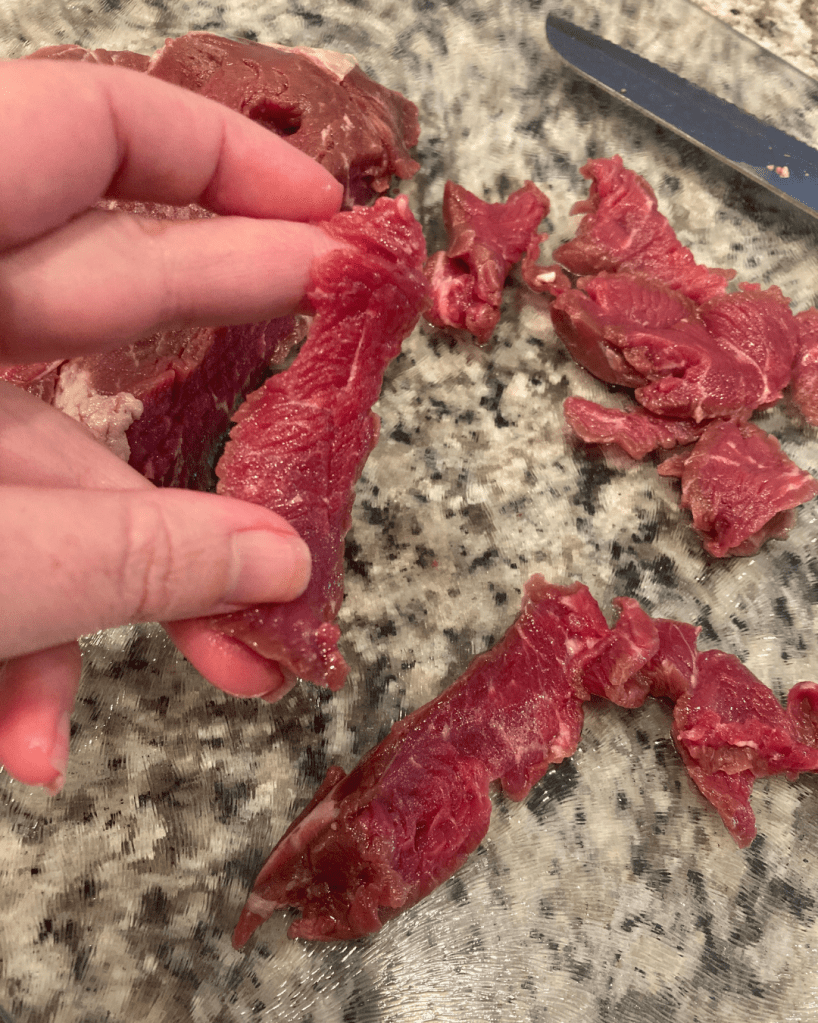
For this recipe, as pictured, I used a ribeye steak. It was packaged as a single steak, just 8/10 of a pound. To turn a ribeye into Philly Cheesesteak, it’s best to achieve a very thin cut. This is hard to do when a steak is fully thawed or cooked first. It’s easiest to do when a steak is raw, and just a bit frozen. In that state, a sharp knife can shave off thin pieces. I try to cut them as thin as I can get them without each piece completely falling apart.

COOKING THE STEAK
Before cooking these thin slices of ribeye, I salt and pepper them on the cutting board. I use sea salt, white pepper, and garlic powder. Keep it simple. I think that’s best here. Heat a skillet over medium heat. When the pan is hot, pour in some olive oil and heat that too. When the oil is hot, add the steak to the pan. Try to lay the pieces flat so they have good contact with the heat of the pan. Because these are so thin, they will cook very quickly. They only need about 90 seconds per side.
(Note: Before adding these ribeye pieces to the flatbread, I snacked on some. They were so tender. I almost prefer this method of cooking to cooking the steak whole. If I were to cook a ribeye for a salad topper, I would definitely do this rather the cook the whole steak and then slice it. You just can’t get the same level of tenderness…at least I never can.)

THE VEGETABLES
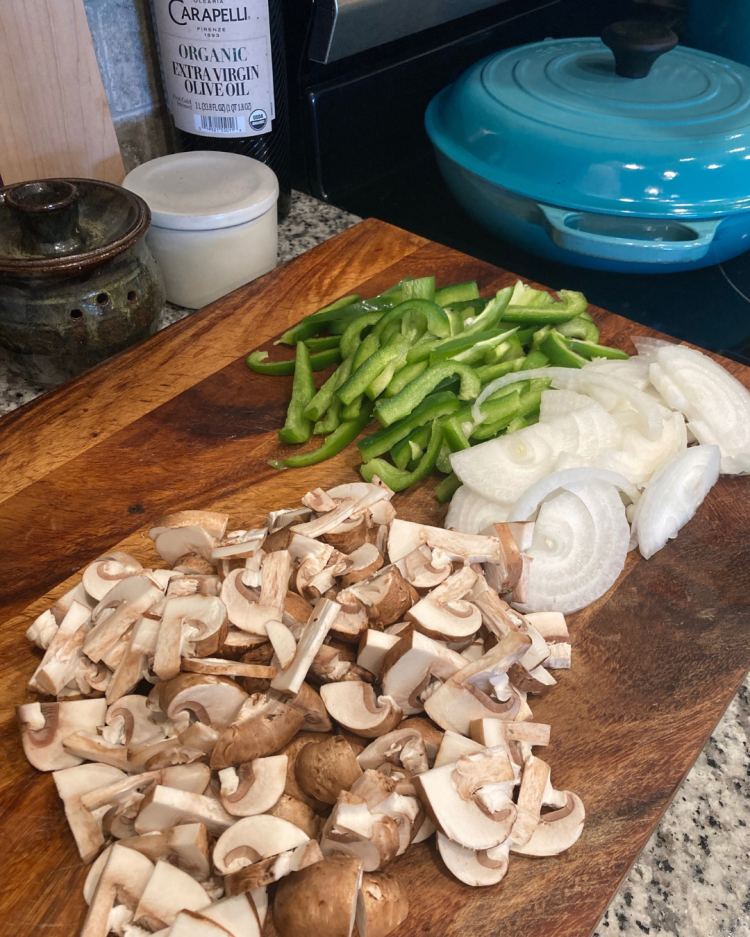
As written, I use a sweet onion, green pepper, and baby Bella mushrooms. You can cut these and place them on the pizza as is. They’ll be a little fresher and crunchier that way. I chose to sauté them just a bit. I used the same pan in which I cooked the steak. When the steak was done, I threw in all of the vegetables for less than two minutes. This just began the cooking process which would then finish in the oven.
(Note: Mushrooms produce quite a bit of liquid when you sauté them. I drained this off before assembling the flatbread.)
THE FLATBREAD CRUST
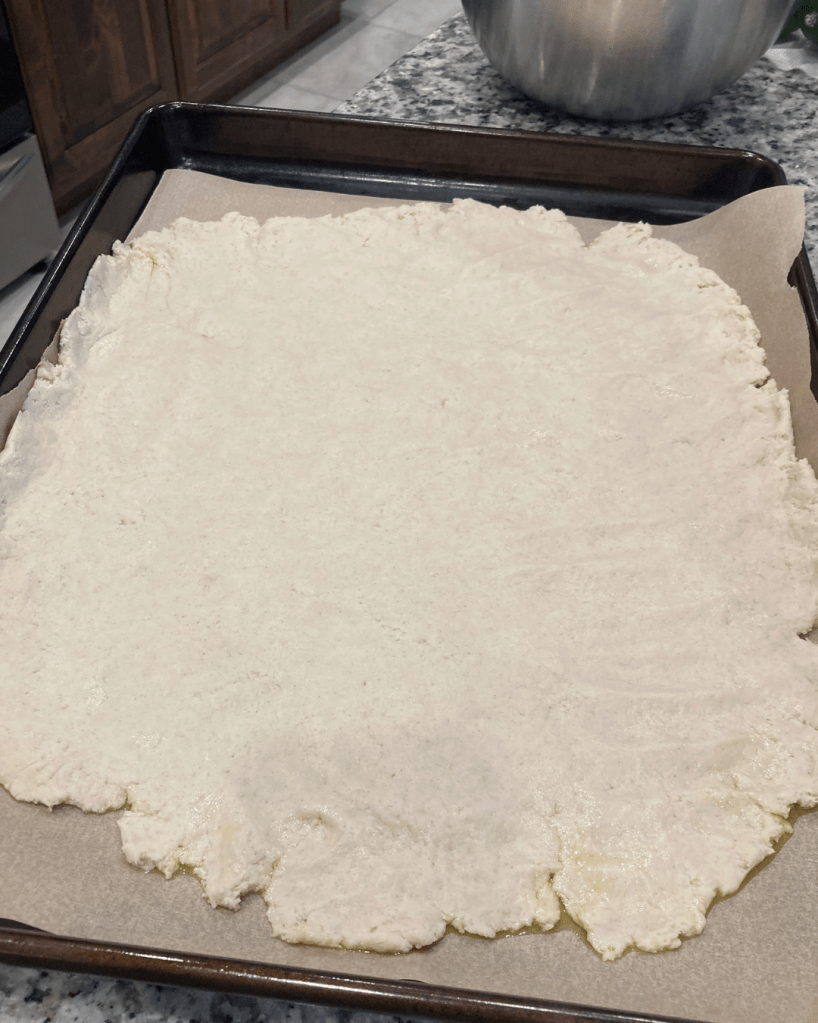
You can make your own dough, or use a store-bought crust. I experimented with both. Gluten free pizza dough has always been a finicky thing for me, but when all was said and done, my family preferred the dough I created to the store bought crust. For that reason, I’ve included my dough recipe below. You can use it, use your own, or buy a crust.
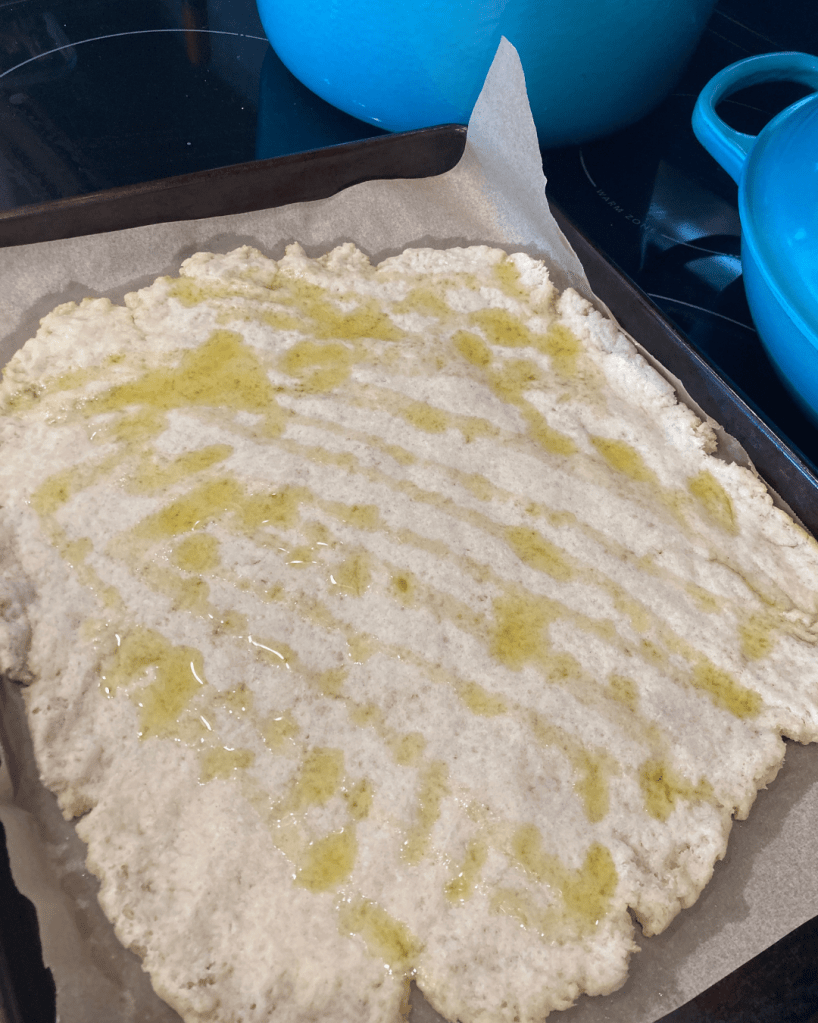
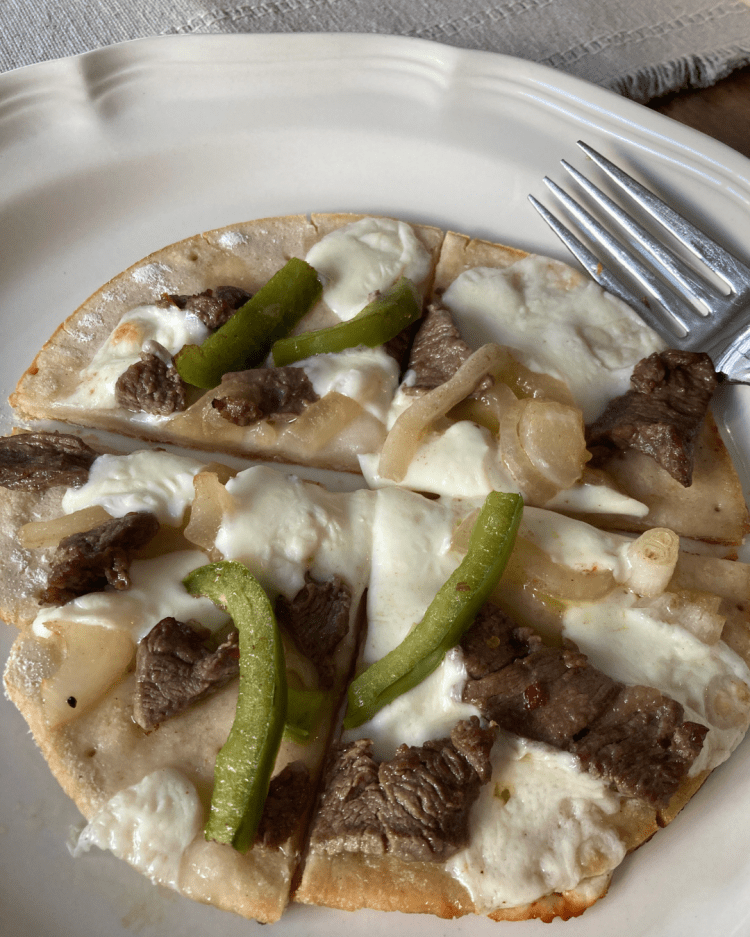
Example of store-bought mini-flatbread crust.
ASSEMBLING THE FLATBREAD
I did not use any sauce on this flatbread. Instead, I drizzled the crust in a layer of olive oil. Then I applied all of the cheesesteak ingredients. You can layer those on as thick as you like. While cheesesteak is traditionally made using provolone cheese, I chose to use mozzarella rounds like these.
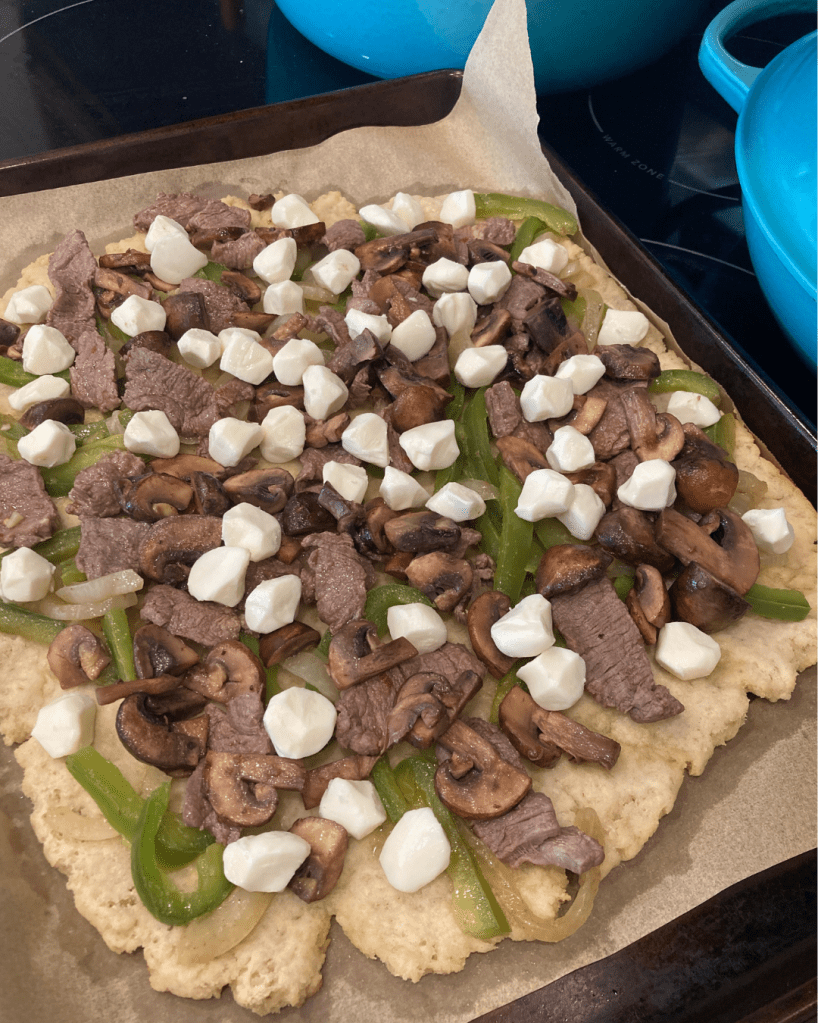
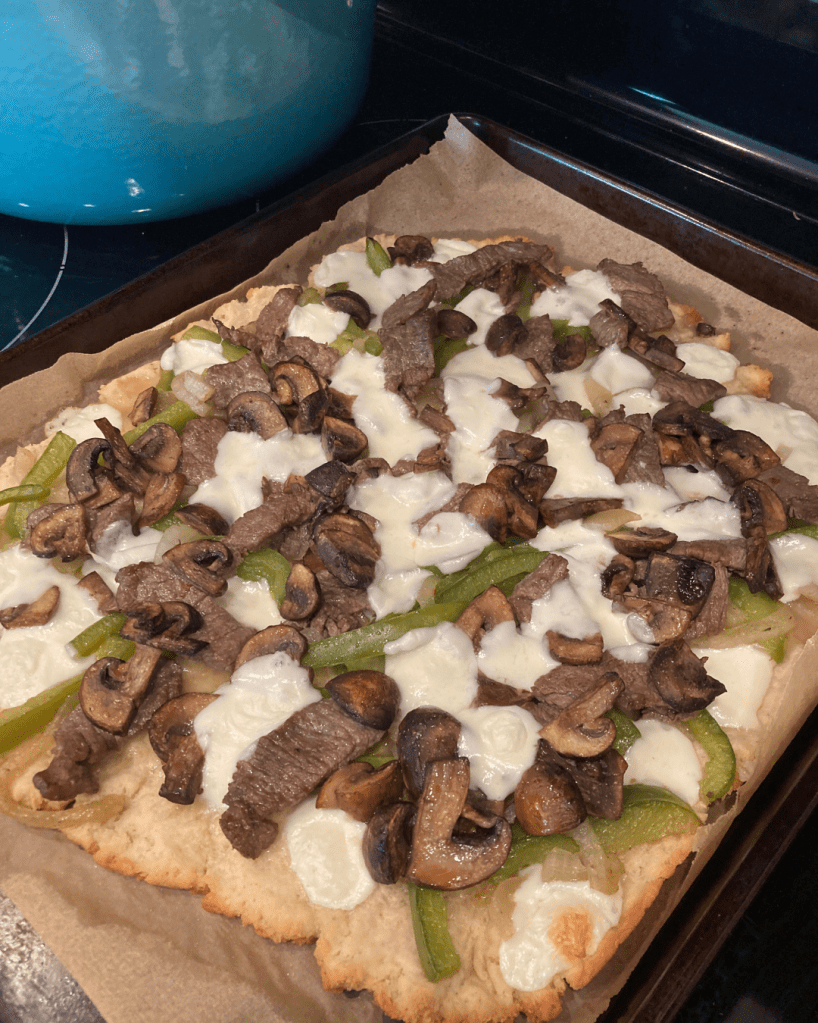
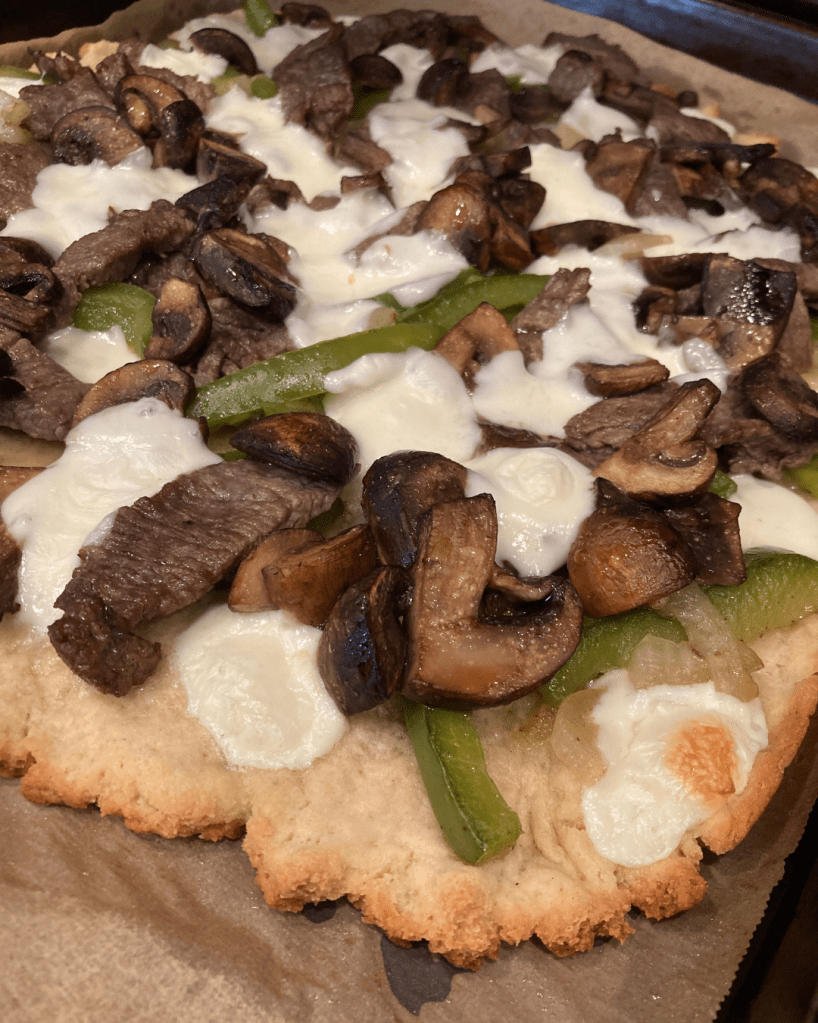
Philly Cheesesteak Flatbread
Ingredients
For the Flatbread:
-
1 1/2 c Gluten Free Flour (like this one)
-
1 tsp baking powder
-
1 tsp xanthan gum
-
3/4 tsp sea salt
-
1 pkg yeast (not instant)
-
1 tbsp sugar
-
1 c warm water
-
2 tbsp olive oil
-
Extra olive oil for the pan
For the Toppings:
-
1 ribeye steak (1 lb or less)
-
Sea salt to taste
-
White pepper to taste
-
Red pepper flakes to taste
-
2 tbsp olive oil
-
1 green pepper, sliced
-
1 sweet onion, sliced
-
8 oz baby Bella mushrooms, sliced
-
8 oz mozzarella pearls like these (or sliced provolone as another option)
-
Extra olive oil for topping the flatbread
1. (You may use this gluten free flatbread recipe or a crust recipe of your choosing. You can also opt to buy a pre-prepared crust. If you do so, skip to step 5.) To prepare the dough, place the flour, baking powder, xanthan gum, and sea salt in a bowl. Combine.
2. In a separate bowl, place the yeast and sugar. Warm a cup of water. This should be warm, but not hot. If too hot, the temperature will kill the yeast. Add the warm water and olive oil to the yeast and sugar. Whisk until dissolved.
3. Add the yeast liquid to the flour, stirring constantly. (A mixer would be great for this. I used a spoon.) Continue to mix until the dough is well combined. It will be kind of sticky. Cover the bowl with a towel and let the dough rest for thirty minutes.
4. When you’re ready to bake the flatbread, set the oven to 425 degrees Fahrenheit. Line a large pan with parchment paper. Spread a thin layer of olive oil over the paper. Place the dough on the oil and push it out from the center until a flat, thin, round or square shape is achieved. Bake the flatbread for 10 minutes. When done, the top will be hardened and the edges may have begun to brown.
5. To prepare the Philly Cheesesteak ingredients, begin by slicing the slightly frozen ribeye steak. Slice the pieces as thin as your knife allows. When done, speed the pieces across the cutting board and sprinkle with sea salt, white pepper, and a bit of red pepper flakes. (This is to personal preference.
6. Slice all of the vegetables and set them aside.
7. Heat a large skillet over medium heat. When the pan is hot, add the olive oil. When the oil is hot, add the steak pieces. Try to lay them as flat against the pan as possible. They will cook very quickly. They only need about 90 seconds per side.
8. When the steak pieces are done, remove them from the pan and add all of the vegetables. If the pan is dry, add additional oil. Sauté the vegetables for about 2 minutes. They will continue to cook in the oven.
9. Set the oven to 450 degrees Fahrenheit. Use the prepared flatbread or a stor-bought crust of your choice. Drizzle olive oil atop the flatbread crust. Layer the steak and vegetable ingredients atop the flatbread. Finally, top ingredients with the mozzarella pearls.
10. Cook the flatbread for 12-15 minutes. The cheese should be melty. The beef will have gained a crispy appearance at the edges. Enjoy!
[/recipe-directions]

If you like this recipe, check out Jennifer’s new book, “The Grass-Fed Guide.” In this book, you will learn how to: find a local farmer, understand the labels and lingo, identify the cuts, and calculate the best deals. You will also learn how to cook with each of the varied cuts that come when buying beef in bulk.

Here on SpringForestFarm.com, Jennifer Taylor Schmidt writes beef recipes for the busy, natural homemaker. It is possible to seek optimal health with limited time and money. Join Jennifer in future posts as she explores the possibilities found in a 1/4 and a 1/2 beeve. You can also find her thoughts and personal health journey on RealFoodRealHealing.com.
 Spring Forest Farm