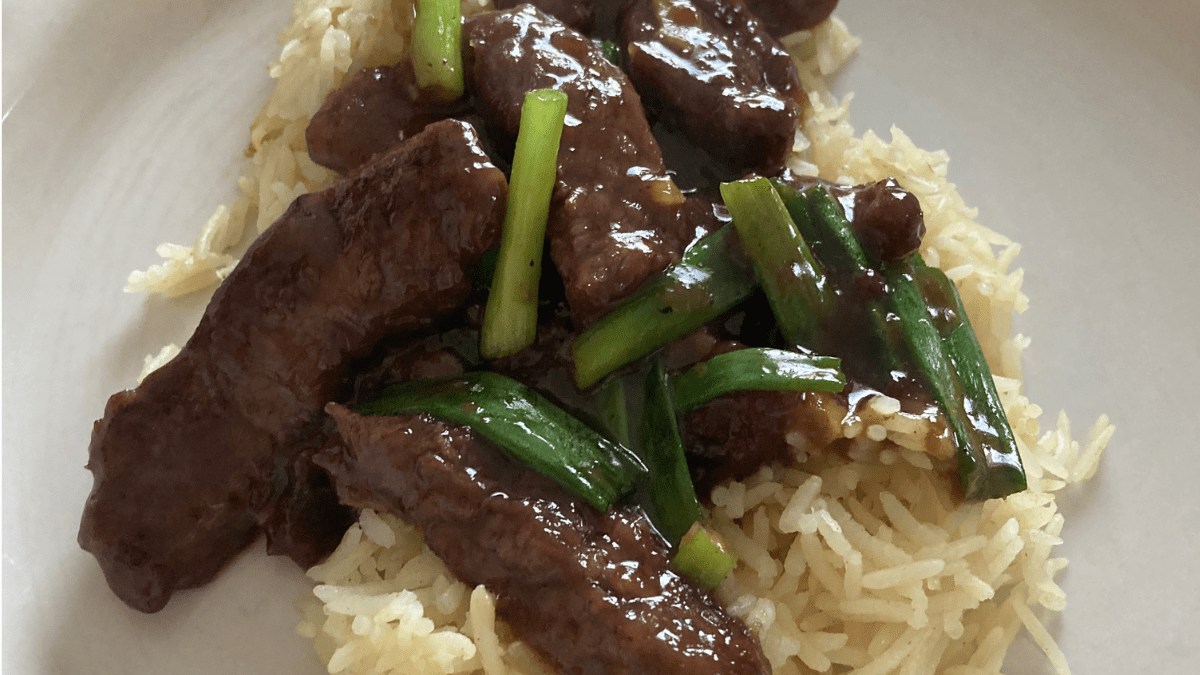
Are you gluten free? Do you miss going to Asian restaurants? Me too. I became gluten free for medical reasons. Since then, I’ve regretfully felt the need to avoid Asian restaurants. There are so many sauces and noodles and dumplings that contain gluten. If you’ve found a safe place to eat Asian food, I’ll admit that I’m a bit jealous! Unfortunately, I haven’t, so I do my best to make restaurant quality Asian food at home. This Gluten Free Mongolian Beef is tender, sweet, and sticky – just like you’d get from a restaurant.
Where’s the Gluten?
In Asian food, gluten is actually quite common. Soy sauce, fish sauce, oyster sauce, hoisin sauce, teriyaki sauce, and duck sauce all contain gluten unless otherwise stated. While rice noodles are common in Asian dishes, you’ll also find wheat noodles. Dumplings like dim sum are traditionally made with wheat flour. Some can be made as rice pastries, but you’d need to be clear about that before ordering. In my case, I find there are just too many variables to navigate. I feel safer avoiding Asian restaurants altogether…and that’s sad as I used to frequent them regularly.
Soy Sauce Substitutes
There are many gluten free options when it comes to substituting for soy sauce. Tamari sauce is still soy based, but does not have gluten. To make tamari sauce, miso paste (made from fermented soy beans) is pressed and mixed with water and salt.
Coconut aminos are another gluten free option. I find that coconut aminos maintain a sweet flavor, like that of coconut. If you choose to cook with this, you will likely need much less honey in this recipe.
My favorite option is a product called “No Soy” sauce. “No Soy” is made by a company called Ocean’s Halo. It’s made from organic molasses, apple cider vinegar, kelp, mushrooms, lime juice, and salt. This is what I use anytime I want that soy-sauce taste. For this product, I find the lowest price at Walmart.
A Quick Tip About Fresh Garlic
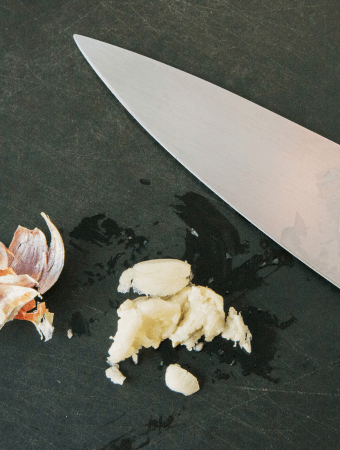
When I lived in Hong Kong as a twenty-one year old student teacher, I knew nothing about cooking. Our Amah, Neneh, (a Filipino woman who lived with us and cooked for us), taught me to peel garlic. It’s a skill that I’ve used pretty much everyday since.
Neneh taught me to use a fat, long knife. Back then, I used a pairing knife for everything. She taught me not to fear the big kitchen knives. They have a purpose. Using the flat side of the largest knife, you smash the garlic cloves hard and fast. With one good smash, all of the peeling should come loose and easily be pulled away. Smashing garlic also does half the work of mincing. Once all of the peel has been pulled away, it’s easy to run the big blade back and forth across the bare cloves.
A Messy Affair
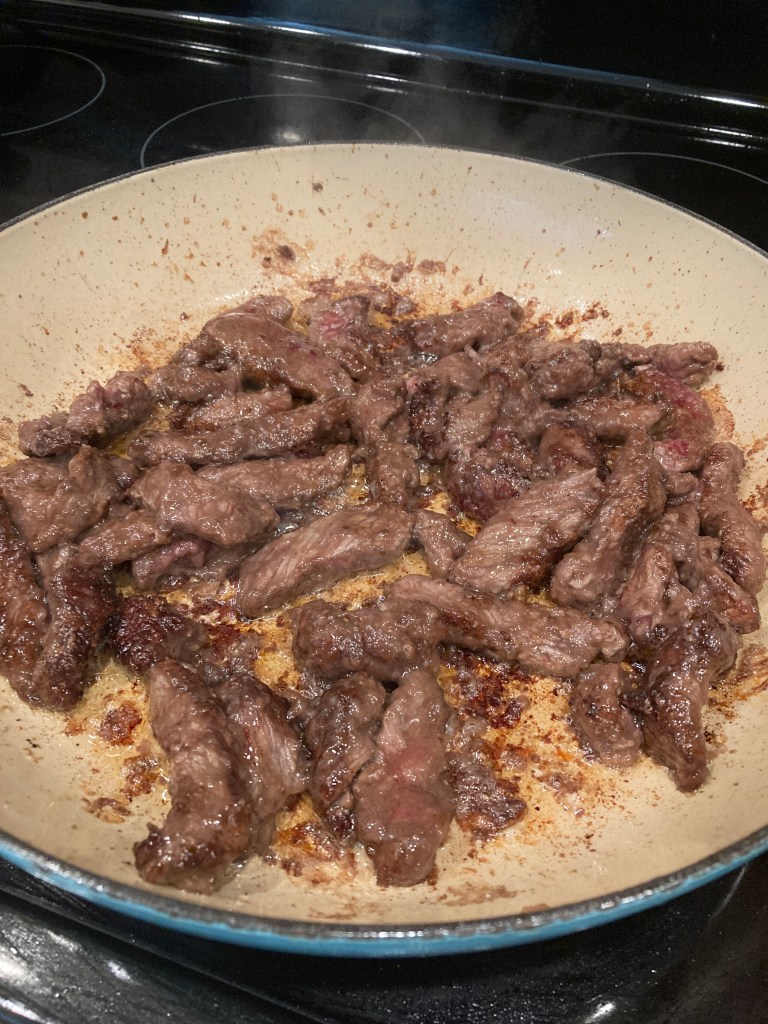
To make Mongolian Beef, you fry very thin cuts of beef. It’s messy like frying chicken. You will get popped by grease. I haven’t figured out a way to avoid that. You will have to deal with extra cleanup. After cooking this latest batch, I found grease splatters on the floor, countertops, backsplash, and of course all over the stove top. There’s just no way around it, Mongolian Beef is a messy affair. I think it’s worth the mess, but you can make that call for your kitchen.
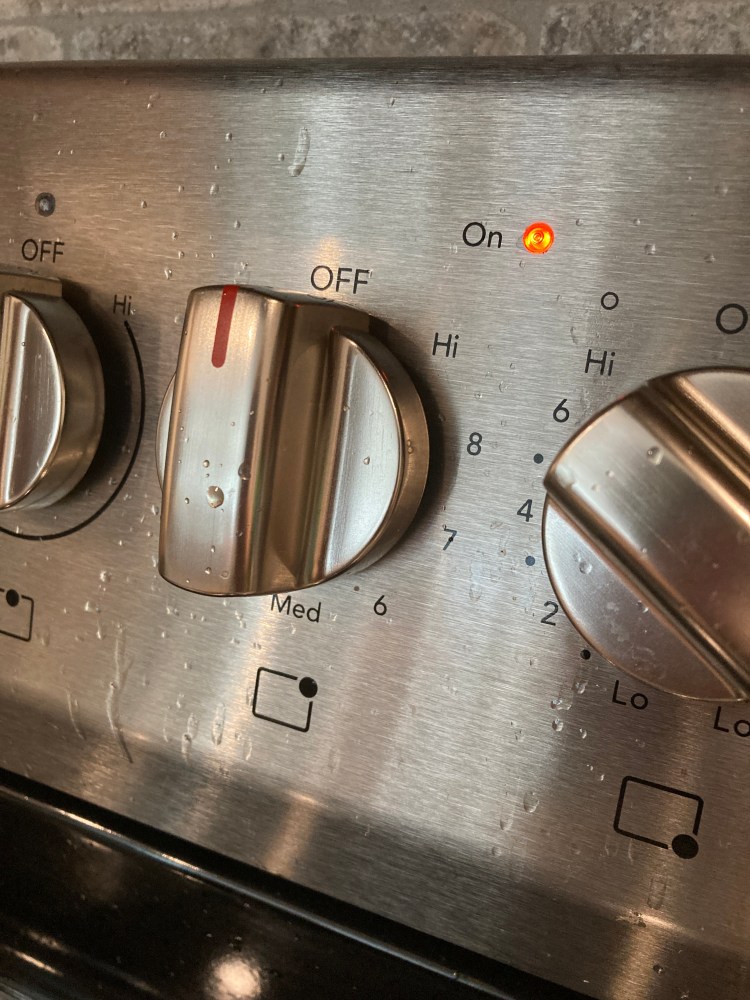
Frying anything is a messy affair. Mongolian Beef is no exception.
What Makes This Recipe Different?
If you compare traditional Mongolian Beef recipes to what I’ve written below, you’ll notice a few differences. I use arrowroot in place of corn starch, and honey in place of brown sugar. I also prefer to flavor the sauce with beef stock where most traditional recipes call for water. And as mentioned above, I choose “No Soy” over traditional soy sauce.
Mongolian Beef is traditionally made with a flank steak or skirt steak. The day that I photographed this recipe, I had neither on hand, so I cooked with a sirloin steak. Flank steak is generally a cheaper cut. It can be a little tough compared to sirloin. Once I removed the fat cap from the sirloin’s side, it was easy to slice thin pieces. (Freeze thawed meat for 30 minutes to firm it up so that you can slice thin, even pieces.) The sirloin worked great for this recipe. I prefer it to the more traditional cuts of meat, and plan to use it again.


As always, adapt and make this recipe your own!
Gluten Free Mongolian Beef
Ingredients
– 2 lb sirloin steak (or flank or skirt steak), sliced 1/4 inch thick
– 1/2 c arrowroot
– 2 tsp olive oil
– 4 cloves garlic, chopped
– 1 heaping tbsp grated ginger
– 1/3 c honey
– 1/2 c “No Soy” or other soy sauce substitute
– 1/2 c beef stock
– 1/2 c olive oil, divided
– 1 bunch green onions, cut into 1 inch pieces
Directions
1. Slice the beef into 1/4 inch pieces. If fully thawed, freeze for 30 minutes before slicing. This will produce a cleaner, easier cut. If using a sirloin steak, remove the fat cap before slicing.
2. Once the beef is sliced, place it into a deep mixing bowl. Cover the beef in the arrowroot powder. Using your hands, mix to coat each side of each piece in the white powder. Refrigerate the coated beef while you prep the other ingredients.
3. Heat a sauce pan over medium heat, then add the 2 tsp of olive oil. Sauté the garlic and ginger until fragrant (30-60 seconds).
4. To the sauce pan, add the honey, “No Soy” or other soy substitute, and the beef stock. Stir to combine and slow boil the sauce for about five minutes. It should reduce and begin to thicken.
5. When the sauce is done, remove it from heat and set it aside.
6. Take the beef from the refrigerator. Heat a large wok or frying pan over medium heat. When the pan is hot, add 1/4 c of the olive oil. When the oil is hot, using tongs, add the beef to the hot oil one piece at a time. With 2 lbs of beef, you will likely need to do more than one batch. Be sure that the beef lays flat on the pan and is not overcrowded. Flip the beef after 2-3 minutes and cook the second side. The beef should be browned and caramelized on both sides. Continue to stir until done. There should be no more blood rising to the surface of the beef.
7. Assuming you need to cook a second batch, move the first batch of beef to a clean bowl. Add the second 1/4 c of olive oil. Using the tongs, repeat step 6. Repeat as many times as necessary to cook all the beef.
8. When done cooking the beef, return all previous batches to the pan. Pour the sauce over the cooked beef. Stir. Use the sauce to scape up any brown bits from the bottom of the pan. The sauce should begin to thicken quickly. Once thickened, turn off the heat.
9. Add the green onions and stir to combine.
10. Remove the pan from heat. The Mongolian Beef is ready to serve over rice or cauliflower rice. Enjoy!

Here on SpringForestFarm.com, Jennifer Taylor Schmidt writes beef recipes for the busy, natural homemaker. It is possible to seek optimal health with limited time and money. Join Jennifer in future posts as she explores the possibilities found in a 1/4 and a 1/2 beeve. You can also find her thoughts and personal health journey on RealFoodRealHealing.com.
 Spring Forest Farm